Every day, millions of people wake up exhausted after eight hours of sleep, gain weight despite eating carefully, lose hair in handfuls in the shower, feel cold in rooms where everyone else is comfortable — and are told by their doctor that their thyroid levels are "fine" or that their thyroxine dose is "adequate." The TSH is in range. The prescription is renewed. The symptoms continue. This is the quiet frustration of living with hypothyroidism in a system that measures a number rather than a person. Will homeopathy cure thyroid disease? It is the most searched question in this space — and it deserves a straight answer. Not a hedge. Not a disclaimer paragraph. A genuine, honest engagement with what homeopathic medicine for thyroid conditions can and cannot do — and why, for a very large number of people, it changes everything the thyroxine tablet alone never could.
The Question Behind the Question — Why Is Your Thyroid Underactive?
This is the question that almost never gets asked in a standard thyroid consultation. The TSH is high. The T4 is low. Thyroxine is prescribed. Appointment over.
But thyroid hormones do not simply stop being produced without reason. And in approximately 90% of hypothyroidism cases, the reason is Hashimoto's thyroiditis — a chronic autoimmune condition in which the immune system produces antibodies that attack and progressively destroy thyroid tissue.
The thyroid is not failing independently. It is being attacked — every day, continuously — by the very immune system that is supposed to protect it.
Thyroxine replaces the hormone the damaged thyroid can no longer produce. It does not stop the immune attack. It does not reduce the antibody levels driving the destruction. It does not address why the immune system developed this pattern. And so the attack continues, the thyroid shrinks further, the dose requirement increases over time, and the patient — whose TSH is technically "controlled" — wonders why they still feel terrible.
This is the gap that homeopathy for hypothyroidism fills. And it is a significant one.
What Hypothyroidism Actually Feels Like — The Full Picture
The symptom list of hypothyroidism is so broad that most of it gets attributed to other causes for years before the thyroid is identified as the source:
Fatigue that sleep does not touch — not tiredness. A cellular exhaustion that comes from metabolic slowing at the level of every tissue in the body. Sleeping ten hours and waking unrested is classic hypothyroidism.
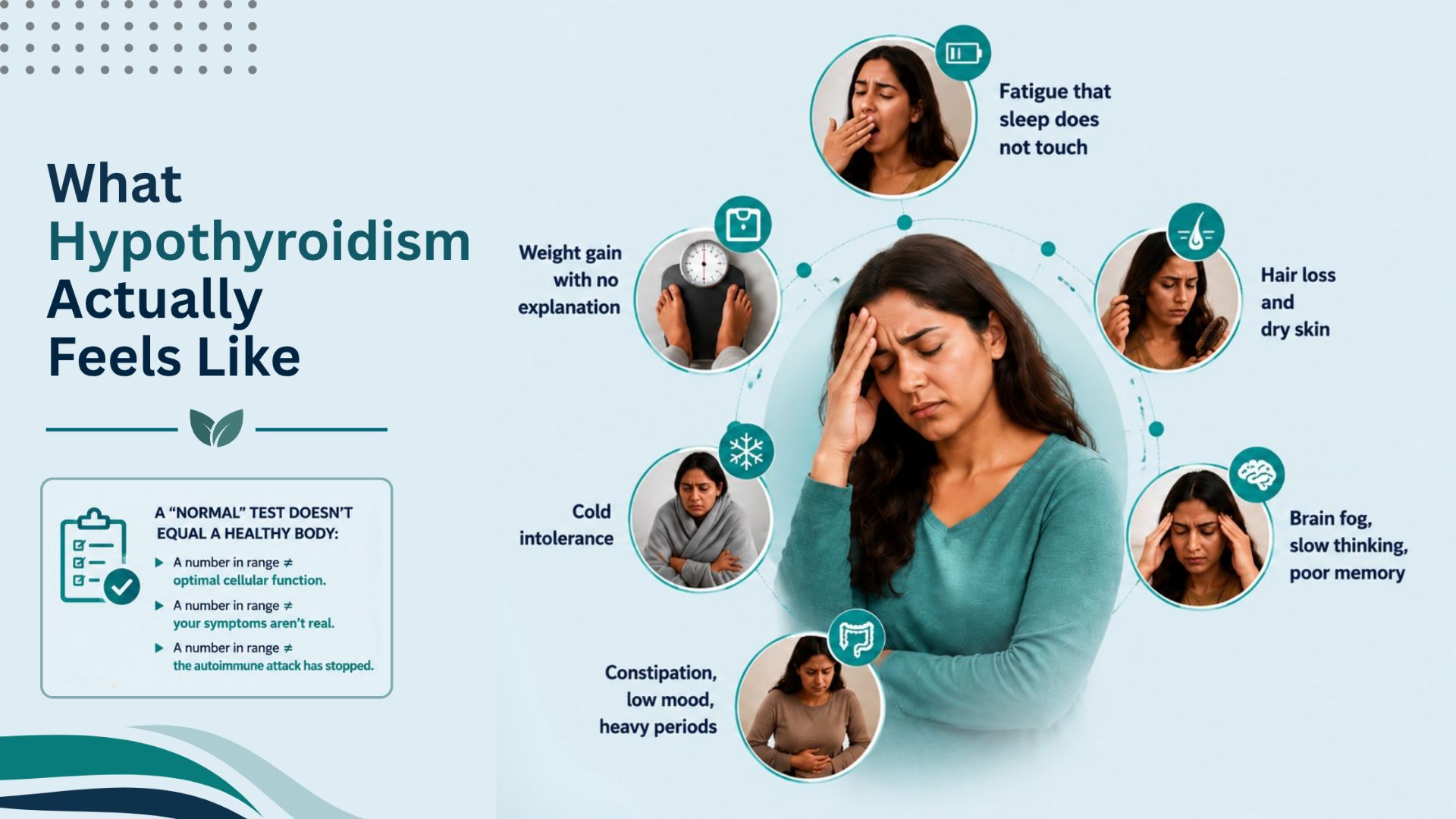
Weight gain with no explanation — the metabolism is genuinely slower. Fewer calories are burned at rest. And no sustainable level of caloric restriction fully compensates for a thyroid that is not producing adequate hormone.
Hair loss and dry skin — thyroid hormones regulate hair growth cycles and skin cell turnover. Diffuse thinning across the scalp — not patterned, just globally thinner — is one of the most distressing and most underrecognised hypothyroid symptoms.
Cold intolerance — the thyroid is the metabolic furnace. When it runs low, the body runs cold. People with hypothyroidism wear extra layers in summer and cannot understand how everyone else is comfortable.
Brain fog, slow thinking, poor memory — cognitive slowing in hypothyroidism is neurological, not psychological. Thyroid hormone is essential for brain function, and insufficient levels produce a genuine reduction in cognitive speed and clarity that is frequently alarming.
Constipation, low mood, heavy periods — digestive motility slows, serotonin production is impaired (explaining the mood connection), and menstrual cycles in women often become heavier and more irregular.
The clinical frustration: many patients on thyroxine with a "normal" TSH continue experiencing most of these symptoms. Because a number in range does not mean optimal cellular function. And it does not mean the autoimmune attack has stopped.
Hypothyroidism vs Hyperthyroidism — Understanding Both Ends
While hypothyroidism — the underactive thyroid — is the more common condition, hyperthyroidism deserves mention because it is equally important and equally responsive to homeopathic constitutional treatment.
Hyperthyroidism produces the opposite picture: excess thyroid hormone causing anxiety, rapid heart rate, heat intolerance, weight loss, tremor, insomnia, and in Graves' disease (its most common autoimmune cause), eye protrusion and significant systemic symptoms.
Hyperthyroidism treatment in homeopathy addresses the autoimmune stimulation of the thyroid — reducing the immune drive that is forcing excess hormone production — without the risks of conventional antithyroid drugs (propylthiouracil carries liver toxicity risk) or radioactive iodine (which produces permanent hypothyroidism in a significant proportion of treated patients).
Both conditions share an autoimmune root. Both respond to constitutional homeopathic treatment aimed at immune regulation. And both illustrate the same fundamental principle: the thyroid is not the problem. The immune system producing the abnormal thyroid response is the problem — and that is where treatment needs to begin.
Hypothyroidism vs Hyperthyroidism — What Is the Difference?
Feature
Hypothyroidism (Underactive Thyroid)
Hyperthyroidism (Overactive Thyroid)
What It Is
Thyroid produces insufficient thyroid hormone
Thyroid produces excess thyroid hormone
Most Common Cause
Hashimoto's thyroiditis — autoimmune attack destroys thyroid tissue
Graves' disease — autoimmune stimulation forces excess hormone production
Autoimmune?
Yes — in 90% of cases
Yes — in majority of cases
Metabolism
Slows down significantly
Speeds up significantly
Weight
Unexplained weight gain despite normal diet
Unexplained weight loss despite normal or increased appetite
Energy
Profound fatigue that sleep does not fix
Restlessness, hyperactivity, inability to relax
Heart Rate
Slow — bradycardia common
Rapid — palpitations and racing heart common
Temperature Sensitivity
Cold intolerance — always feeling cold
Heat intolerance — always feeling too warm
Mood
Depression, low motivation, brain fog
Anxiety, irritability, emotional volatility
Sleep
Excessive sleepiness, unrefreshing sleep
Insomnia, difficulty settling, restless sleep
Bowel Habits
Constipation
Frequent bowel movements or diarrhoea
Skin & Hair
Dry skin, brittle nails, diffuse hair loss
Thin, fine hair, warm and moist skin
Menstrual Cycle
Heavy, irregular, or prolonged periods
Light, infrequent, or absent periods
Risk if Untreated
Myxoedema, cardiovascular disease, infertility
Thyroid storm, osteoporosis, atrial fibrillation
Conventional Treatment
Levothyroxine (synthetic T4 replacement)
Antithyroid drugs, radioactive iodine, surgery
Conventional Treatment Risk
Lifetime dependency, dose escalation over time
Liver toxicity (PTU), permanent hypothyroidism (radioactive iodine)
Homeopathic Approach
Constitutional treatment addressing Hashimoto's autoimmune pattern — reducing antibodies, supporting thyroid function
Constitutional treatment reducing immune stimulation of the thyroid — calming overproduction without suppressing overall immunity
Can Homeopathy Help?
Yes — particularly in early Hashimoto's; reduces antibodies, improves TSH, addresses symptoms thyroxine misses
Yes — reduces autoimmune stimulation, manages symptoms, supports normalisation of hormone levels
How Homeopathic Medicine for Thyroid Works
The Constitutional Approach — Treating the Immune System, Not Just the Gland
Homeopathic treatment for hypothyroidism does not prescribe a "thyroid remedy." It prescribes for the complete individual whose thyroid has been affected — the immune pattern, the constitutional type, the hormonal history, the emotional picture, and the specific character of their symptoms.
A Methodex homeopathic doctor assessing hypothyroidism will explore:
When did symptoms begin — was there a trigger? Pregnancy, a significant stress, a viral illness, or emotional upheaval? What is the antibody picture — Hashimoto's with elevated anti-TPO, or primary thyroid hypofunction? What symptoms are most dominant and most burdensome? What is the hormonal context — menstrual pattern, perimenopause, postpartum thyroiditis? What is the constitutional picture — thermal sensitivity, energy pattern, digestive health, emotional character?
From this complete picture, the constitutional remedy is selected — one that addresses the autoimmune immune pattern, the metabolic tendency, and the individual's complete health picture simultaneously.
Will Homeopathy Cure Thyroid — The Honest Answer
For early Hashimoto's hypothyroidism where significant thyroid tissue remains intact: constitutional homeopathic treatment can produce measurable reductions in anti-TPO antibody levels, improvement in TSH toward normal range without medication change, reduction in the full hypothyroid symptom burden, and in documented cases, reduction in thyroxine dose requirement as the thyroid's own function recovers. These are not theoretical outcomes. They are documented in clinical homeopathic practice and increasingly in observational research.
For long-standing Hashimoto's with significant thyroid tissue destruction: complete independent thyroid function restoration is less achievable — but meaningful reduction in ongoing immune damage, significant symptom improvement in the dimensions that thyroxine does not address (fatigue, cognition, mood, hair), and improved overall quality of life are realistic and consistently achieved outcomes.
For patients already on thyroxine: homeopathic constitutional treatment addresses what thyroxine cannot — the autoimmune activity, the T4-to-T3 conversion impairment that leaves many patients symptomatic despite normal TSH, and the constitutional picture that produced the thyroid vulnerability in the first place.
The honest answer to "will homeopathy cure thyroid?" is: it depends on the individual, the duration, the severity, and the consistency of treatment — but it offers the most complete treatment available for the autoimmune root of most thyroid disease.
Lifestyle Factors That Directly Influence Thyroid Health
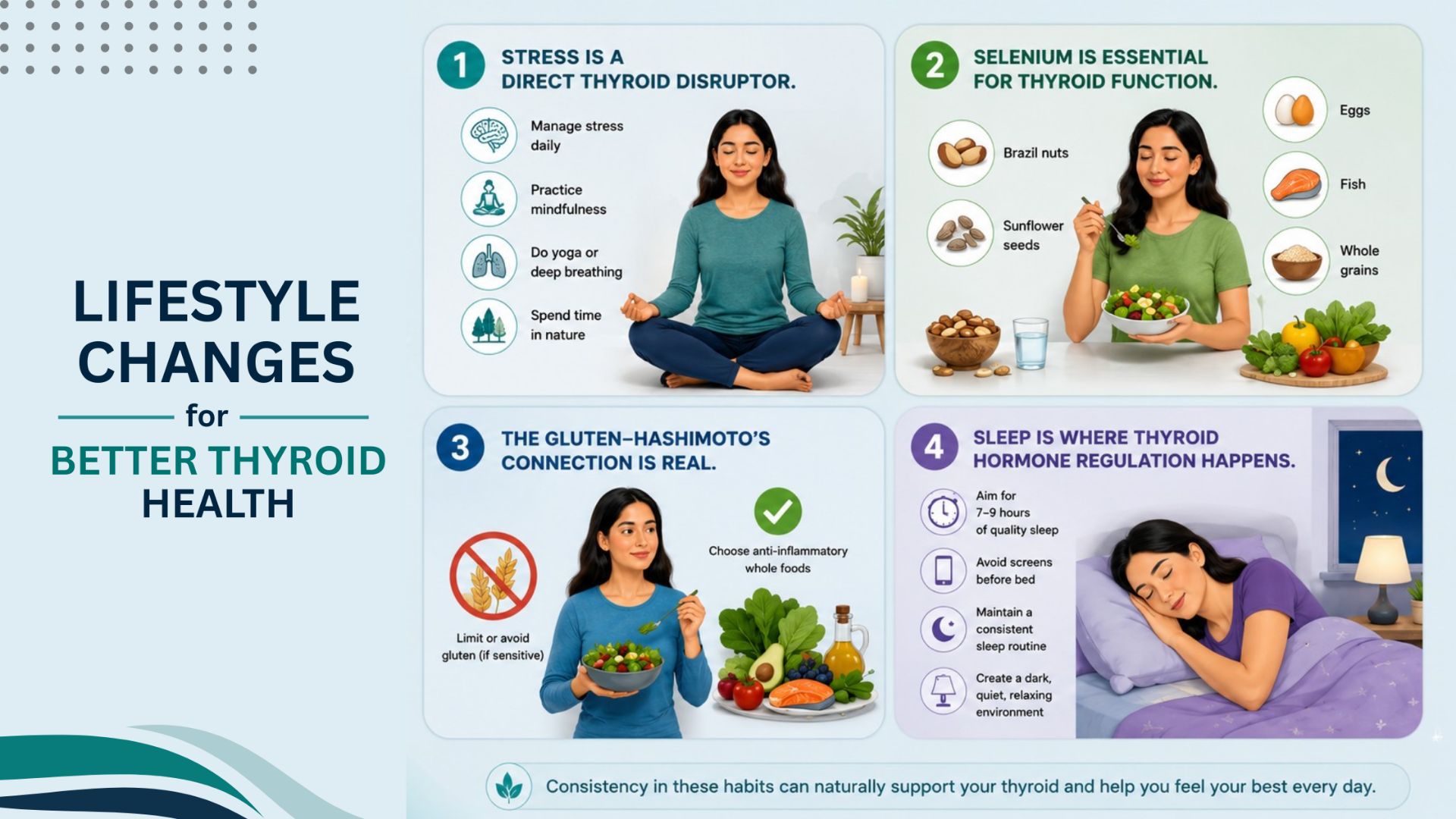
Stress is a direct thyroid disruptor. Cortisol suppresses TSH production and impairs T4-to-T3 conversion — the step that converts the largely inactive storage hormone into the active form cells actually use. Chronic stress means chronically suboptimal thyroid function even in people on adequate medication. Stress management is thyroid treatment.
Selenium is essential for thyroid function. It is required for T4-to-T3 conversion and for the glutathione peroxidase enzyme that protects thyroid tissue from oxidative damage — the mechanism through which Hashimoto's produces glandular destruction. Brazil nuts are the richest dietary source. Selenium deficiency worsens Hashimoto's activity measurably.
The gluten-Hashimoto's connection is real. Molecular mimicry between gliadin (a gluten protein) and thyroid tissue means the immune response to gluten cross-reacts with thyroid tissue in some individuals. Many Hashimoto's patients report significant antibody reduction and symptom improvement on a gluten-reduced diet. It is worth trialling for three months.
Sleep is where thyroid hormone regulation happens. TSH production follows a circadian rhythm peaking during sleep. Disrupted sleep directly impairs thyroid axis function and worsens the fatigue and cognitive symptoms of hypothyroidism in a compounding cycle that is hard to break without addressing both simultaneously.
Conclusion
The thyroid consultation that ends with a prescription renewal and a TSH number is not a complete consultation for a condition whose root — in nine out of ten cases — is the immune system. The fatigue that persists, the weight that will not shift, the hair that keeps thinning despite an "adequate" dose — these are not imagined. They are the symptoms of a condition that is only half-treated when the hormone is replaced but the immune attack is ignored.
Homeopathic medicine for hypothyroidism offers the other half of the treatment — the part that asks why the immune system is attacking the thyroid, addresses that pattern constitutionally, and works toward a thyroid that functions better because the attack on it is reducing, not just a TSH that looks better because a synthetic hormone is substituting for what the thyroid can no longer make.
At Methodex, our homeopathic doctors specialise in the individualised constitutional assessment and treatment of hypothyroidism and Hashimoto's thyroiditis — taking the complete autoimmune, hormonal, constitutional, and lifestyle picture before prescribing anything.
Book your consultation with a Methodex homeopathic doctor today — and begin the thyroid treatment that asks the right question first.