Walk into any Indian household and you'll find a mix of medicine cabinets — a strip of allopathic tablets for fever, a bottle of ayurvedic churna for digestion, and somewhere in the back, a small vial of homeopathic globules for "whatever comes up." Most families use all three without ever really understanding how they're different, or which one actually makes sense for a given problem. This confusion isn't a small thing — choosing the wrong treatment path can mean months of managing symptoms without ever addressing what's actually wrong. This guide breaks down homeopathy and allopathy, homeopathy and ayurveda, and even lesser-known systems like electro homeopathy — so that the next time you're standing in that medicine cabinet, you're choosing with clarity, not habit.
Difference Between Homeopathy and Allopathy — Two Philosophies, Two Very Different Approaches to Healing
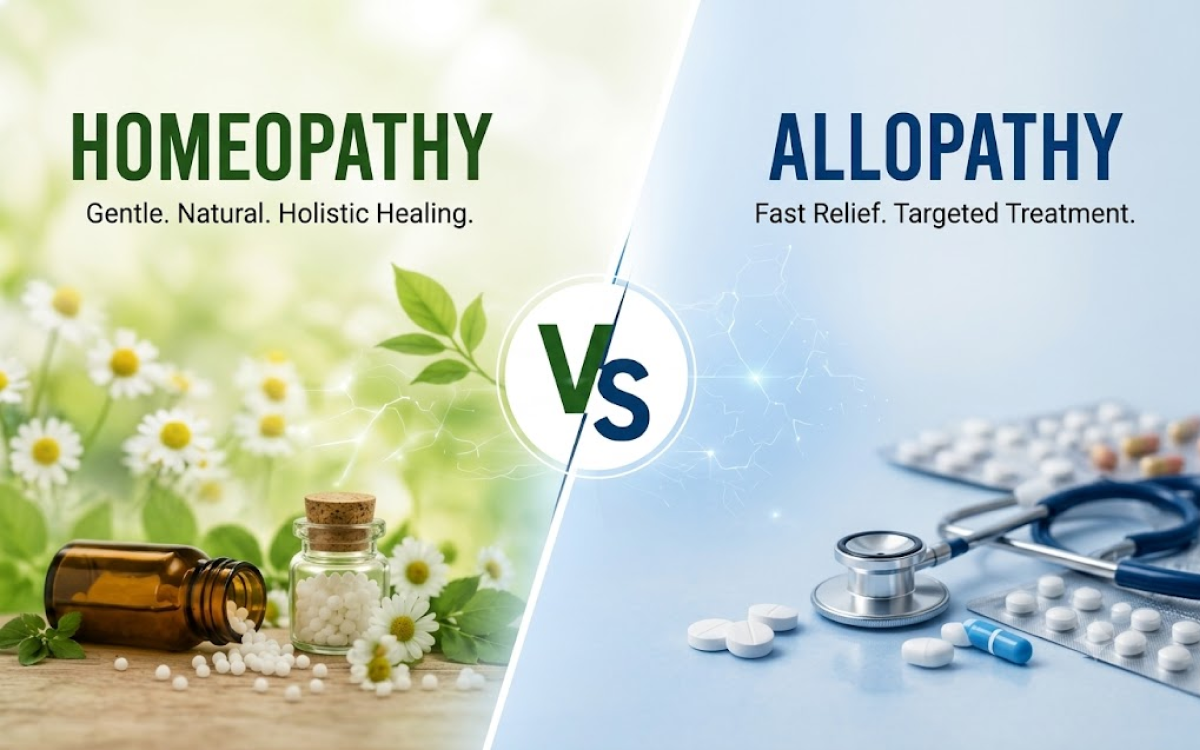
The difference between homeopathy and allopathy isn't just about the medicines themselves — it's about how each system defines "treatment" in the first place. Allopathy, the conventional medicine most of us grew up with, generally works by directly targeting a symptom or pathogen — an antibiotic kills bacteria, a painkiller blocks pain signals, an antacid neutralises stomach acid. It's fast, evidence-driven, and indispensable in emergencies and acute conditions. Homeopathy and allopathy diverge sharply here: homeopathy works on the principle that the body has its own healing intelligence, and a correctly matched remedy stimulates that response rather than overriding it. This is why homeopathy vs allopathy debates often come down to speed versus sustainability — allopathy for the acute crisis, homeopathy for the chronic pattern behind it.
Is Homeopathy Better Than Allopathy? It Depends What You're Treating
This is the question every family eventually asks, and the honest answer is: neither is universally "better" — they're built for different jobs. A fracture, a bacterial infection, or a medical emergency needs allopathy's speed and precision. But recurring conditions — chronic acidity, seasonal allergies, hormonal imbalances, or a child's repeated infections — often respond better to homeopathy's root-cause approach, precisely because allopathy homeopathy comparisons in these areas consistently show homeopathic treatment reducing recurrence, not just suppressing the current flare-up.
What Is Mother Tincture in Homeopathy? Understanding Where Remedies Actually Come From
Every homeopathic remedy begins as a mother tincture — the original, undiluted extract drawn from a plant, mineral, or animal source. This concentrated tincture is then diluted and succussed (vigorously shaken) through multiple stages to create the potentised remedies used in treatment. Understanding this process highlights exactly why homeopathy and allopathy differ so fundamentally at the manufacturing level — allopathic drugs are dosed for direct chemical action, while homeopathic remedies are diluted specifically to stimulate the body's own response rather than deliver a measurable dose of the original substance.
Difference Between Ayurveda and Homeopathy — Which Ancient System Fits Modern Indian Families Better?
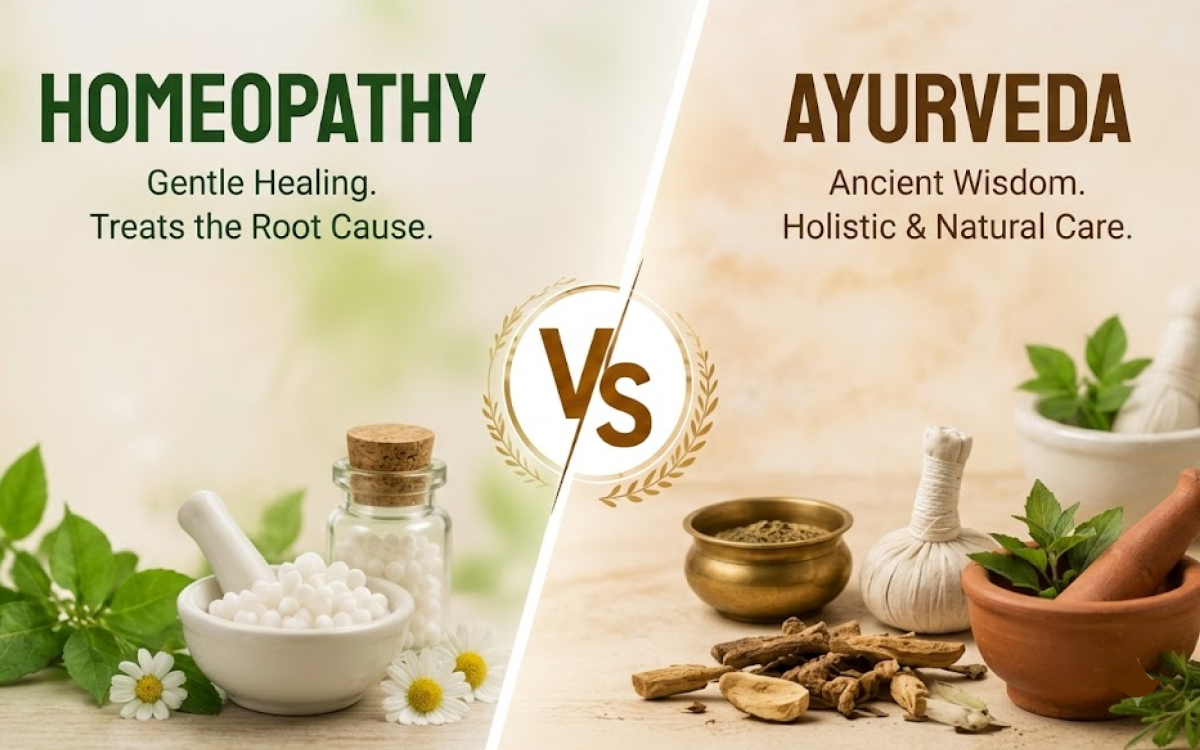
Both ayurveda and homeopathy are holistic systems, which is exactly why they're so often confused with one another — but the homeopathy and ayurveda difference runs deeper than most people realise. Ayurveda treats the body through the lens of doshas (Vata, Pitta, Kapha) and relies heavily on herbal formulations, dietary regulation, and lifestyle correction over a longer timeline. Homeopathy and ayurveda share the belief that the whole person must be treated, not just the disease — but homeopathy uses highly diluted remedies matched to a person's precise symptom pattern and constitution, often requiring far smaller and more targeted interventions than ayurvedic protocols.
Ayurveda Homeopathy — Where the Two Systems Actually Overlap
Despite their differences, ayurveda homeopathy approaches overlap in philosophy more than technique — both reject the idea of treating a diagnosis in isolation, both consider emotional and lifestyle factors central to healing, and both are generally regarded as low-risk compared to long-term allopathic use. Many Indian families use both systems simultaneously — ayurveda for digestive and seasonal balance, homeopathy for constitutional and chronic conditions — without significant interaction concerns
Electro Homeopathy — The Lesser-Known Alternative Medicine Making a Quiet Comeback
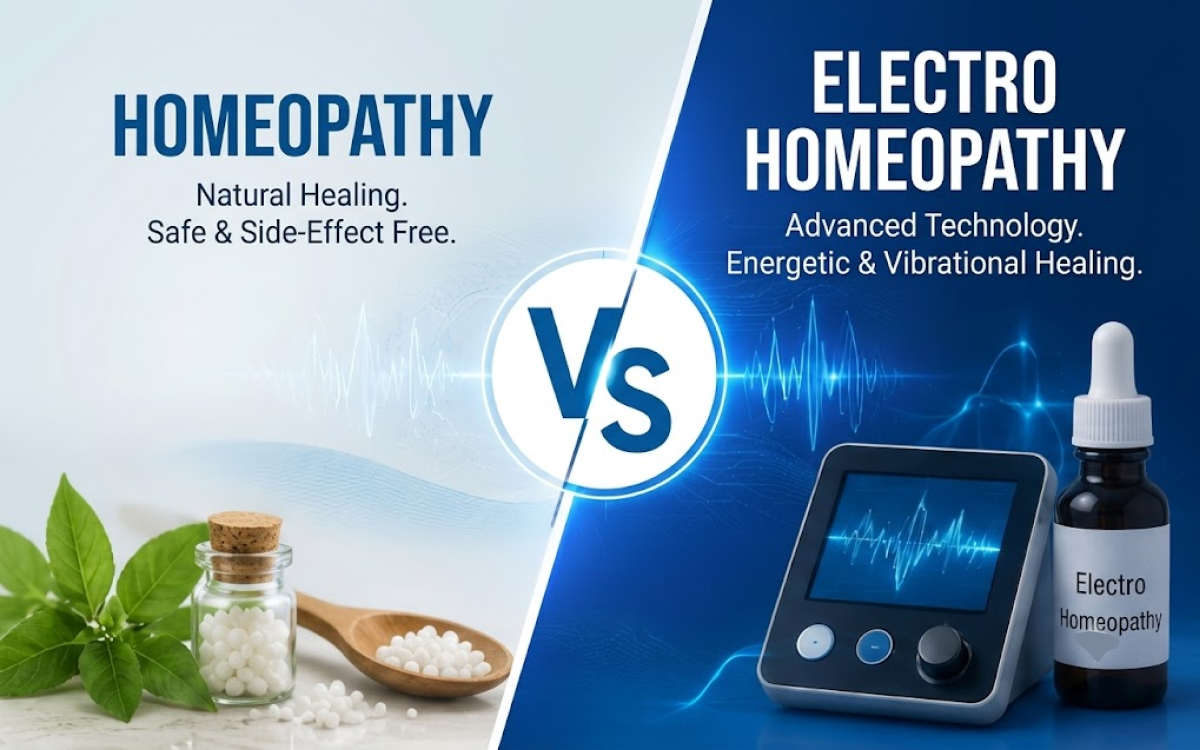
Most families have never heard of electro homeopathy, and that's understandable — it's a niche branch that developed as an offshoot of traditional homeopathic principles.
What Is Electro Homeopathy, Exactly?
What is electro homeopathy? It's a 19th-century system developed in Italy that uses plant-based remedies believed to carry a specific vital energy, prepared using a distinct extraction method rather than the potentisation process used in classical homeopathy. It's important to note that electro homeopathy treatment is not the same as mainstream, evidence-supported classical homeopathy — it remains a smaller, less regulated tradition, and its scientific backing is considerably weaker than established homeopathic practice.
Electro Homeopathy Course — Is It a Different Branch Altogether?
A common question everyone asks about electro homeopathy in India, is that whether it is simply another name for classical homeopathy, or something entirely separate. The answer is the latter — it's a distinct branch with its own history, remedy preparation methods, and training path. A small number of institutions do offer an electro homeopathy course for practitioners interested in the tradition, but it remains far less standardised and regulated than accredited classical homeopathy education. For families exploring alternative medicine, this distinction matters — always verify that a practitioner is trained in recognised, regulated homeopathic systems before beginning treatment.
Homeopathy in India — A Legacy Rooted in Trust
Homeopathy in India isn't a recent trend — it's a system that's been part of Indian households for well over a century, trusted across generations for exactly the reasons families still choose it today: gentleness, individualised care, and a focus on long-term healing over quick suppression.
Homeopathy Origin — How It All Began
The homeopathy origin story starts in late 18th-century Germany, where physician Dr. Samuel Hahnemann developed the system based on the principle that "like cures like." Frustrated with the harsh, often damaging medical practices of his time, Hahnemann sought a gentler alternative — one that worked with the body rather than against it. What began as one doctor's experiment eventually grew into a global system of medicine practised in over 80 countries today.
History of Homeopathy in India — From Introduction to Mainstream Acceptance
The history of homeopathy in India dates back to the early 1800s, when it was first introduced by European practitioners and quickly found receptive ground among Indian physicians and patients alike. Over the decades, it grew from a niche practice into one of the most widely used systems of medicine in the country, eventually receiving formal government recognition and regulation — a rare distinction that reflects just how deeply it became woven into India's healthcare landscape.
Understanding Homeopathy — Principles, Scope & Safety
Beyond its history, what makes homeopathy genuinely different is how it works — and understanding this helps families make more informed decisions about when and how to use it.
Principle of Homeopathy — The Core Idea Behind Every Remedy
The foundational principle of homeopathy is "similia similibus curentur" — like cures like. In simple terms, a substance that causes certain symptoms in a healthy person, when diluted and prepared correctly, can help the body overcome similar symptoms during illness. This is combined with the idea of individualisation — no two patients with the same diagnosis necessarily receive the same remedy, because treatment is matched to the person's complete symptom picture, not just the disease label.
Scope of Homeopathy in India — Where It's Headed Next
The scope of homeopathy in India continues to expand, particularly as more families seek alternatives to long-term dependency on conventional medication for chronic and recurring conditions. With growing government support, dedicated homeopathic medical colleges, and increasing integration into India's broader healthcare framework, homeopathy is steadily moving from "alternative" to a genuinely mainstream option for millions of households.
The Right System Isn't One-Size-Fits-All — It's the One That Fits You
There's no single "winner" in the homeopathy vs allopathy vs ayurveda debate — each system has a role, and the smartest approach is often knowing which one to reach for and when. Allopathy remains essential for emergencies and acute infections. Ayurveda offers deep, time-tested lifestyle and dietary correction. And homeopathy consistently stands out for chronic, recurring, and constitutional conditions — treating everyone with a gentle, individualised approach that addresses root causes rather than managing symptoms indefinitely.
At Methodex, our practitioners specialise in exactly this kind of holistic care homeopathy is known for — treating the whole person, not just the diagnosis, for every age, every condition, and every family member under your roof. And with online homeopathy medicine consultations now making expert care more accessible than ever, getting started no longer means waiting for an in-clinic appointment — the right guidance is just a conversation away.
No confusion. No guesswork. Just the right treatment, for the right reason.
Book Your Consultation Now