Dry patches in winter. Acne that survives every face wash. A fungal rash that clears up — then quietly returns. Skin problems have a frustrating habit of being diverse in appearance but identical in persistence. And while the dermatology aisle keeps growing, the solutions remain largely the same: suppress, cover, repeat. Homeopathy asks a different question entirely — not what is on the skin, but why is it there? That shift in thinking is what makes skin disease treatment in homeopathy genuinely different, and for millions of people across all ages, genuinely effective.
A Closer Look at Different Skin Problems and Their Treatment Options
Skin conditions can vary widely in their causes, symptoms, and severity, ranging from acne and warts to melasma, fungal infections, allergies, and skin tag disorders. While some skin issues are temporary and easily managed, others may require long-term care and professional treatment. Understanding the nature of each condition is the first step toward finding the right solution. In the following sections, we'll explore common skin problems, their symptoms, possible causes, and the treatment approaches that can help restore healthier skin.
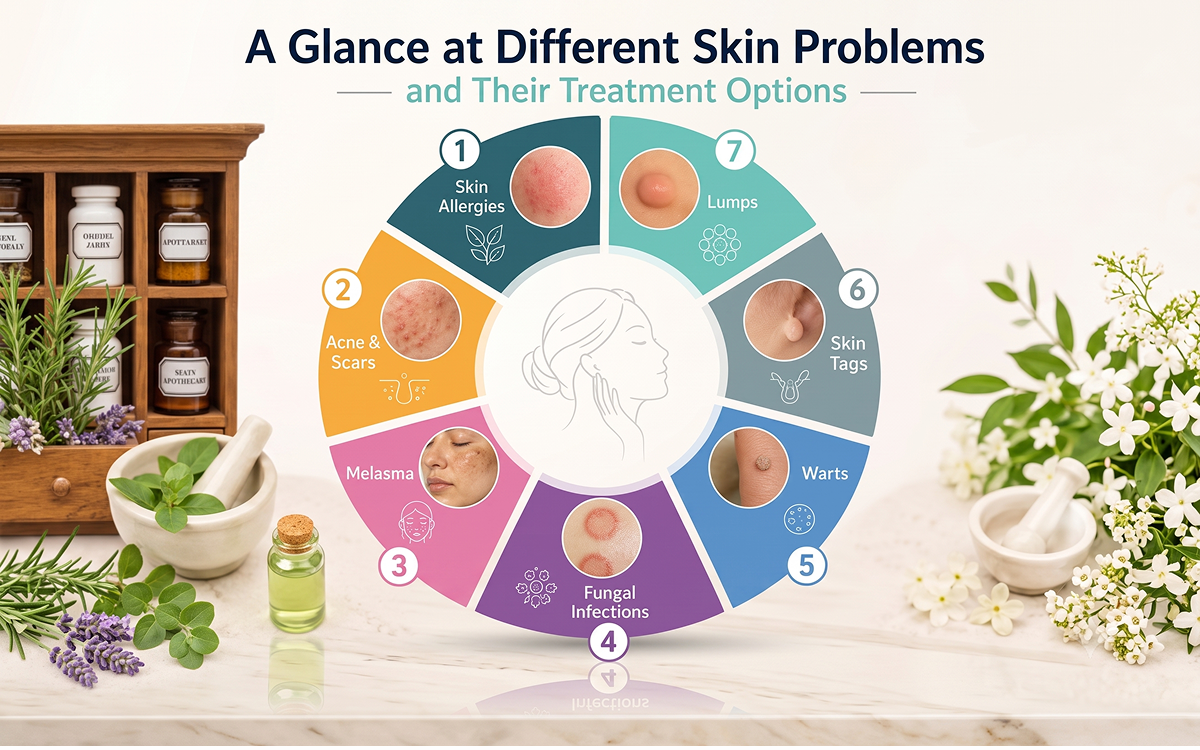
Skin Allergies: When Your Body Overreacts (And Won't Stop)
A skin allergy occurs when your immune system misidentifies a normally harmless substance (an allergen) as a threat. In an attempt to protect your body, the immune system launches an inflammatory response, releasing chemicals like histamine into the skin. This triggers localized redness, swelling, itching, and irritation.
Unlike a typical infection, skin allergies are not contagious—they are entirely unique to an individual's specific immune sensitivities.
How to Manage and Relieve Skin Allergies
- Identify and Eliminate the Trigger: The most effective long-term solution is tracking down what caused the flare-up and avoiding it. Keeping a daily symptom diary can help narrow down culprit foods, products, or environments.
- Cool and Calm the Area: Apply cool, damp compresses to soothe intense itching and reduce localized swelling.
- Protect Your Skin Barrier: Avoid harsh, heavily fragranced soaps. Opt for mild, pH-balanced, hypoallergenic cleansers, and lock in moisture with a thick, fragrance-free emollient immediately after bathing to keep the skin's physical defense system intact.
- Avoid Hot Water: Washing or showering in hot water strips the skin's natural protective oils, which aggravates nerve endings and makes allergic itching significantly worse. Stick to lukewarm water.
Homeopathy for skin allergy
It addresses one of the most common and frustrating skin complaints across all age groups. Whether it's hives after eating certain foods, contact dermatitis from metals or fabrics, or seasonal flare-ups, allergic skin reactions share a common root: an immune system that has lost its sense of proportion.
Homeopathy medicine for skin allergy and itching works by recalibrating this immune response at a deeper level. The remedy selection isn't just "anti-itch" — it considers whether the itching is worse at night, whether it burns after scratching, whether it's accompanied by anxiety or digestive issues. This level of detail is what makes skin allergy treatment in homeopathy genuinely personalised rather than protocol-driven.
For children especially, skin allergy is often the first sign of an atopic tendency — a predisposition that, if addressed early through homeopathy, may prevent the progression to asthma or chronic rhinitis later in life.
Acne & Scars: More Than a Teenage Problem
If you think acne is just about oily skin and clogged pores, your skin disagrees. For decades, acne was dismissed as a temporary rite of passage, a teenage phase fueled by puberty that would simply resolve itself with time. Today, we know that acne is a complex, chronic inflammatory disorder of the pilosebaceous unit (the hair follicle and its associated sebaceous gland) that affects millions well into adulthood.
Acne in teenagers is predominantly hormonal, driven by a surge in androgens. In adult women, it is often cyclical, lingering along the jawline and tied to fluctuating hormonal shifts. In men, it can be deeply stress-driven, dietary, or directly linked to gut health. Homeopathic treatment for acne is one of the most searched and sought-after solutions precisely because it rejects a one-size-fits-all protocol and works differently for each of these unique presentations.
How to Manage Acne and Prevent Scarring Naturally
Long-term control over breakouts requires a daily routine that supports your skin's natural barrier rather than fighting against it:
- Soothe, Don't Scrub: Aggressively scrubbing active acne with harsh exfoliants or washcloths breaks the skin barrier and spreads bacteria, exacerbating inflammation and increasing the risk of permanent scarring. Use your fingertips to apply mild, non-comedogenic, pH-balanced cleansers.
- Never Pick or Squeeze: Popping a pimple pushes bacteria and debris deeper into the dermis, turning a minor surface blemish into a deep, tissue-damaging cyst that is far more likely to leave a permanent scar.
- Ditch Hot Water: Always wash your face with lukewarm water. Hot water strips away the skin’s essential lipids, signaling your sebaceous glands to overproduce sebum to compensate for the dryness.
- Calm the Gut-Skin Axis: Minimize your intake of high-glycemic foods, refined sugars, and ultra-processed dairy, all of which spike insulin levels and trigger systemic inflammatory cascades that flare up acne.
Homeopathic treatment for acne and acne scars
Conventional dermatology typically relies on broad-spectrum oral antibiotics, which temporarily suppress bacteria while depleting your vital gut flora, or harsh topical agents that thin and dry out the skin barrier over time. Homeopathy, by contrast, addresses the internal terrain—the hormonal milieu, the chronic stress response, and the digestive axis—that allows acne to persist in the first place.
Instead of merely suppressing the surface inflammation, a constitutional homeopathic remedy is selected based on your entire individual profile—your specific stress triggers, how your skin reacts to climate changes, your hormonal patterns, and your lifestyle. This stimulates the body's intrinsic immune and regulatory systems to clear the skin from the inside out.
And once the active breakouts are managed? Homeopathic treatment continues the work. Certain remedies support tissue remodelling and reduce the hyperpigmentation that lingers long after the pimple itself is gone. The skin doesn't just clear — it heals.
Melasma: The Patch That Refuses to Budge
Melasma is a common skin condition characterized by brown, gray-brown, or dark patches that typically appear on the face, especially the cheeks, forehead, nose, and upper lip. It is often associated with hormonal changes, sun exposure, genetics, and certain medications. While it is not harmful, it can affect a person's confidence and appearance.
How Does Melasma Cure Homeopathy Work?
Those stubborn brown or grey-brown patches, most common on the face — are notoriously resistant to treatment. Laser therapies lighten it temporarily. Sunscreen slows it. But melasma cure in homeopathy approaches it from the hormonal and constitutional angle that most treatments ignore.
Since melasma is deeply connected to hormonal fluctuations (pregnancy, contraceptives, thyroid imbalance), homeopathic remedies that address these root drivers can produce results that surface treatments alone cannot. Patience is required — but the improvement tends to be lasting rather than seasonal.
Fungal Infections: The Condition That Keeps Returning
Fungal infections occur when fungi grow excessively on the skin, leading to symptoms such as itching, redness, rashes, scaling, or discoloration. Common types include ringworm, athlete's foot, and fungal infections in skin folds. Warm, humid conditions, excessive sweating, and weakened immunity can increase the risk of developing these infections.
How Does Homeopathic Treatment for Fungal Infection Work?
Ringworm, athlete's foot, candida rashes, nail fungus — homeopathic treatment for fungal infection is particularly relevant for people who've used antifungal creams multiple times only to see the infection come back within weeks. The question isn't just about killing the fungus. It's about why the skin's environment keeps inviting it back.
A depleted immune response, chronic dampness, poor gut flora balance, or even prolonged antibiotic use can create conditions where fungal overgrowth becomes a recurring story. Homeopathy addresses this host environment, making recurrence progressively less likely.
Warts, Skin Tags & Lumps: Small But Persistent
Warts, skin tags, and lumps are common skin growths that can appear on different parts of the body. Warts are caused by certain strains of the human papillomavirus (HPV), while skin tags are soft, harmless growths often found in areas where skin rubs together. Lumps can develop for various reasons, including cysts, fatty deposits, or other benign conditions. Although many of these growths are non-cancerous, they should be evaluated if they change in size, shape, or appearance.
Homeopathy for warts and homeopathy for skin tags are among the more specific and well-documented applications in dermatological homeopathy. Warts — caused by the HPV virus — tend to recur after freezing or burning because the viral terrain hasn't changed. Homeopathic remedies that match the character of the warts (flat, seedy, cauliflower-like, painful vs. painless) can lead to gradual but often complete resolution without physical intervention.
Skin tags, while benign, are cosmetically bothersome and multiply over time. Certain constitutional remedies in homeopathy for skin diseases have shown consistent results in reducing and eventually eliminating them.
Even lumpy skin disease treatment in homeopathy — while primarily known in veterinary contexts — draws from the same principles of addressing inflammatory skin eruptions and immune dysregulation that make homeopathy effective for nodular or indurated skin conditions in humans.
Beyond Creams and Serums: Daily Lifestyle Shifts for Disease-Free, Resilient Skin
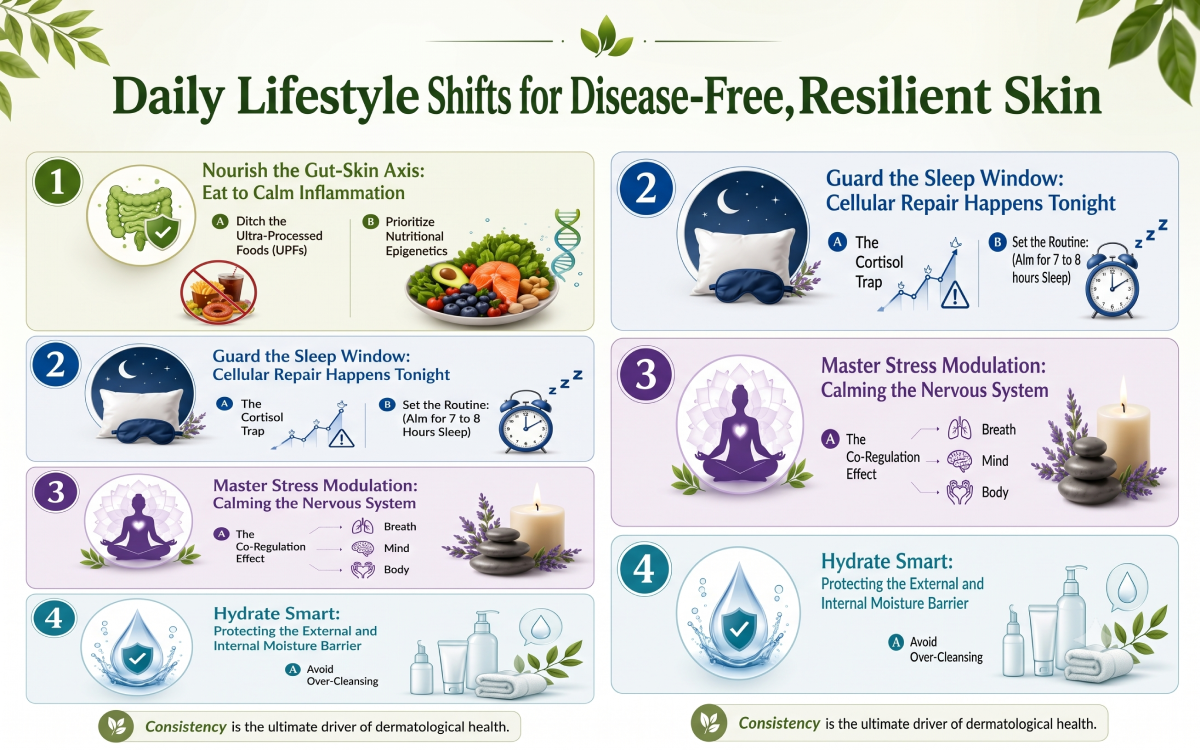
While targeted treatments play an essential role during active flare-ups, the true foundation of long-term, disease-free skin lies in your daily habits. By making deliberate shifts in how you nourish, rest, and protect your body, you can alter the expression of chronic skin conditions and build deep cellular resilience from the inside out.
1. Nourish the Gut-Skin Axis: Eat to Calm Inflammation
The connection between your digestive tract and your skin microbiome—known scientifically as the gut-skin axis—is one of the most exciting areas of modern dermatology. An unbalanced gut (dysbiosis) leads to systemic, low-grade inflammation, which frequently manifests on the surface as redness, itching, and breakouts.
- Ditch the Ultra-Processed Foods (UPFs): Diets high in refined sugars, trans fats, and artificial additives cause sharp spikes in blood sugar and trigger insulin pathways that stimulate excess sebum production and trigger inflammatory cascades.
- Prioritize Nutritional Epigenetics: Focus on a vibrant, whole-food diet rich in antioxidants (berries, leafy greens), zinc (seeds, legumes), and healthy fats. Omega-3 fatty acids, found abundantly in walnuts, flaxseeds, and fatty fish, act as natural internal moisturizers, strengthening cell membranes and calming down the hyper-inflammatory responses seen in eczema and psoriasis.
2. Guard the Sleep Window: Cellular Repair Happens Tonight
"Beauty sleep" is far from a cosmetic cliché; it is a physiological necessity for disease-free skin. During deep sleep phases, your body undergoes a massive cellular reset. Your system flushes out cellular waste and releases growth hormones that repair daily environmental micro-damage.
- The Cortisol Trap: Chronic sleep deprivation keeps your body stuck in a low-grade fight-or-flight response, sending stress hormones like cortisol skyrocketing. High cortisol breaks down collagen, compromises your skin's natural moisture barrier, and triggers inflammatory skin conditions to flare up aggressively.
- The Routine: Aim for 7 to 8 hours of uninterrupted sleep. Keep your bedroom cool, dark, and entirely screen-free for at least an hour before bedtime to prevent artificial blue light from disrupting your melatonin production.
3. Master Stress Modulation: Calming the Nervous System
Your skin and your nervous system share the exact same embryonic origin—meaning they are deeply hardwired together. When you experience psychological stress, your skin cells actively produce stress neuropeptides, which weaken the skin’s defenses and trigger immediate inflammation.
- The Co-Regulation Effect: For conditions heavily aggravated by stress, such as neurodermatitis, eczema, and vitiligo, topical treatments only scratch the surface. Incorporating daily stress-reduction habits—such as 10 minutes of deep box breathing, progressive muscle relaxation, or unstructured outdoor walks—is a therapeutic necessity. Calming your nervous system physically lowers the inflammatory markers circulating in your bloodstream.
4. Hydrate Smart: Protecting the External and Internal Moisture Barrier
True skin hydration is a two-way street. It requires drinking enough clean water throughout the day to support cellular cellular metabolism, but it also requires protecting the outer skin barrier so that moisture doesn't evaporate into thin air.
- Avoid Over-Cleansing: Stripping your skin with harsh, foaming soaps or excessively hot water ruins the delicate acid mantle and washes away the good bacteria that protect you from pathogens. Stick to lukewarm water, use mild, pH-balanced cleansers, and lock in moisture immediately after bathing.
The Long-Term Perspective
Consistency is the ultimate driver of dermatological health. Skin cells take roughly 28 to 45 days to renew completely, meaning that lifestyle modifications will not transform your skin overnight. However, by committing to these foundational habits, you are not just managing surface symptoms under a temporary band-aid—you are systematically altering the environment in which your skin grows, paving the way for lasting, disease-free vitality.
Why Homeopathy for Skin Diseases Offers a True Path to Permanent Healing
When standard dermatological treatments rely heavily on suppression—using topical steroids, immunosuppressants, or strong antibiotics to clear the skin quickly—they often treat the skin as an isolated canvas. Homeopathy, however, operates on a fundamentally different premise.
Choosing homeopathy for skin diseases means recognizing that a breakout, a rash, or a chronic patch of eczema is not the disease itself; it is simply the external manifestation of an internal imbalance.
The Constitutional Difference: Treating the Root, Not Just the Surface
Conventional medicine typically prescribes the same steroid cream to ten different people suffering from eczema. Homeopathy rejects this one-size-fits-all protocol. A qualified homeopathic doctor evaluates the unique presentation of your symptoms alongside your underlying constitution:
- The Individual Symptom Picture: Does your skin flare up from dry, cold air, or does it worsen in humid heat? Is the itching relieved by warm compresses or cold water?
- The Genetic & Emotional Blueprint: Homeopathy considers your family history, metabolic tendencies, and even your stress levels or emotional triggers.
By matching a highly individualized, ultra-diluted remedy to your exact physical and psychological profile, homeopathy works to stimulate your body's self-healing mechanism (the vital force).
Breaking the Cycle of Suppression and Recurrence
The underlying danger of relying solely on heavy topical creams is symptom suppression. When an inflammatory eruption is forcefully pushed back into the body without addressing the internal driver, the condition frequently returns with greater intensity once the cream is stopped. In many cases, suppressed skin issues can even transition into internal respiratory vulnerabilities over time.
Homeopathic remedies do not suppress. They help modulate your immune system's hypersensitive response from within. Over months of consistent, dedicated treatment, patients typically experience a progressive decline in the frequency, duration, and severity of their flare-ups. This is what true, long-term dermatological resilience looks like—allowing your skin to heal naturally, gently, and permanently from the inside out.
Who Is Homeopathic Skin Treatment For?
Everyone. That's genuinely the answer.
- Children: Safe, gentle, and free from the side effects of steroid creams. Ideal for infant eczema, heat rashes, allergic flare-ups, and recurring skin infections.
- Women: Particularly effective for hormonally-driven conditions — melasma, cyclical acne, pregnancy-related skin changes, and autoimmune skin conditions.
- Men: Often more severe presentations of acne, fungal infections, and folliculitis respond well when the constitutional type and lifestyle factors are factored in.
Homeopathy for skin diseases doesn't discriminate by age, gender, or skin type. It individualises by person — which is exactly why it works across such a wide range of presentations.
Conclusion
Your skin doesn't need to be managed indefinitely. It needs to be understood — and then healed from within.
At Methodex Health, our homeopathic approach to skin disease treatment goes beyond symptom suppression. Whether you're dealing with a child's recurring rash, a woman's persistent melasma, or a man's stubborn fungal infection, our practitioners combine classical homeopathy with a thorough understanding of your health history, triggers, and constitution.
Ready to stop covering it up and start clearing it out? Book your consultation with Methodex Health today — and let your skin finally tell a different story.